There Are No Substitutes for Authorized Product Replication
Do you know the difference between “replication” and “emulation”?
Emulation is an attempt to mimic the functionality and timing of the original part.
Replication (product replication or cloning) is an exact physical and electrical duplicate with semiconductor process matching: pin-for-pin construction, identical die size, and matched cycle-for-cycle timing guarantee original device performance.
Emulation is not a substitute for authorized product replication. An emulated component mimics the functionality and attempts to replicate the timing of the original. Often, the functionality of the emulated component is incomplete, and it can fail very late in regression testing when a customer is in the system software validation stages. Initially, emulation may seem more cost efficient than replication; however, experience has proven that costs quickly escalate during system validation. Additionally, emulated semiconductors are not tested with the original manufacturer’s test program, so required performance across all conditions is not guaranteed. For critical applications, it is crucial for health, safety, and security that devices do not fail in the field and perform as needed.
A twist on emulation involves taking RTL (Verilog or VHDL) with constraints and mapping it from one technology implementation to another, particularly for legacy voltage (5V and 3.3V) products, for example, converting a legacy voltage FPGA to another FPGA or from an FPGA to ASIC. The challenge with this approach is the reliance on thorough past constraints. In reality, these legacy voltage products were not fully validated until they were integrated into the systems for which they were designed. During that legacy voltage era, this design validation methodology was more common; unfortunately, it does not lead to thorough constraints or regression suites. This form of emulation can easily yield ineffective results.
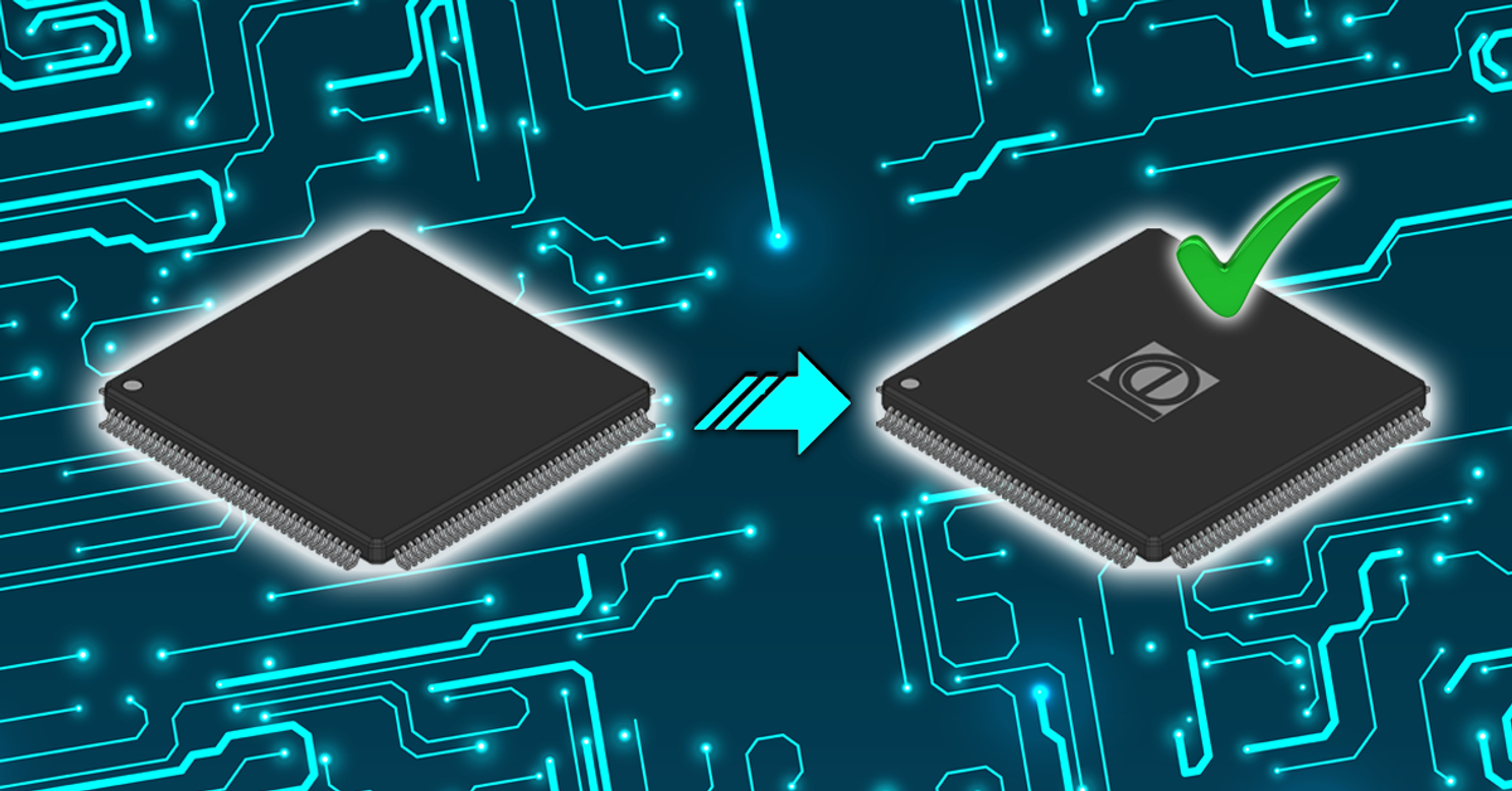
At Rochester, we turn this emulation approach into a replication approach by thoroughly characterizing the original legacy voltage device in the lab before the technology conversion to ASIC. Thorough device characterization, we fill in the constraint gaps and can assure our customers we are taking an approach that results in fully drop-in replacements.
Rochester Electronics provides replicated products supporting the life cycle demands of civil aviation, military, industrial controls, and medical devices. As a leader in authorized replication and ported semiconductor devices, Rochester’s replicated product portfolio includes microprocessors, DSPs, microcontrollers, mixed-signal, and full digital or analog designs. Aviation customers partner with Rochester to avoid the costly DO-254 recertification path by replicating or cloning devices that simplify minor change classification. Rochester’s methodologies and industry-leading development teams also allow customers to migrate FPGA, PLD, or other programmable solutions into source-able products for the life of their product lines.
Rochester can replicate the original device, avoiding lengthy, expensive system re-qualification, recertification, or redesign. The end product is a form, fit, and functional replacement guaranteed to the original data sheet performance—no software changes are required.
- Physical design replication from the original archive or die.
- Physical process replication through device analysis and selection.
- Reverse engineering opportunities.
- Electrical performance replication; whether device cloning or legacy voltage conversion to ASIC.
- Produce ITAR Designs.
100% Software compatibility with no errata.
Rochester Design and Authorized Replication solutions
Moving Beyond the BOM: Rochester Electronics’ Design, Product Replication, and System Analysis
Manufacturers


