Back to the Future: A Stroll Through Device History
Discussing our favorite semiconductors of the 1970s and their impact
Rochester Electronics was established back in 1981 and over the decades has witnessed amazing and innovative achievements unfold across the semiconductor industry. In parallel Rochester has built a team with the depth of knowledge and experience only a 41-year-old company specializing in legacy and new generation technologies can. With our diverse backgrounds and generational expertise, meetings at Rochester include comments such as “this device changed the industry!” or “I can’t believe you have never heard of this device!” Discussions then tend to evolve into mini-history lessons where the past meets the present.
It is a bit of fun to reminisce and reflect upon how technology has advanced. Over the next 12 months, our internal debates on the topic of Favorite 1970’s Semiconductors will be aired for all to enjoy.
Kicking off the topic we introduce the Signetics 555 timer. This device has recently received a great deal of attention as we celebrate its’ 50-year anniversary.
A question to ponder as you read; “whatever happened to Signetics?”, the company that brought us one of the most popular semiconductors of all time?
Did Hans Camenzind realize that he was creating such a ubiquitous device when he designed it for Signetics back in 1971? The 555 Timer is one of those components, that once released, found its way into designs well beyond its original purpose. Long before designs included dedicated clock networks and specialized timing devices, the 555 Timer was a go-to solution.
Providing flexible operation in a stable, monostable, bistable, or Schmitt trigger modes, the device lent itself to the creativity of the engineers of the day. If your design needed precision timing, you wanted to generate a delay, implement a PWM, or manipulate a signal pulse, designers figured out ways to do it with the 555 Timer. The device established the basis for countless application notes and reference designs for the next three decades.
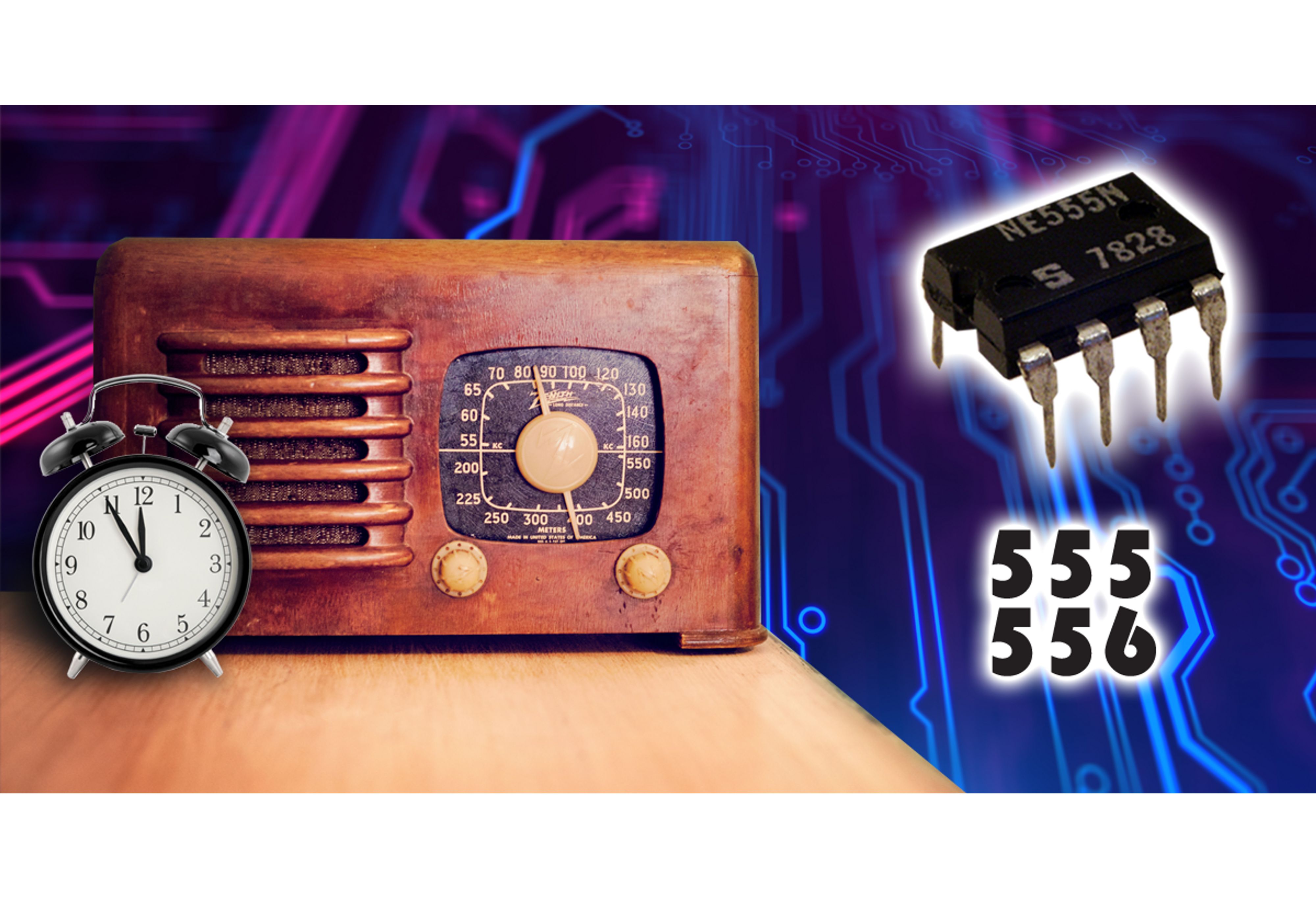
As with many innovative ideas, it was not long after Signetics released their NE555 (DIP-8) and SE555 (TO-5) that other suppliers followed suit. Growing popularity spurred the development of dual (556) and quad (558) versions and to keep up with technology advancements low-power CMOS versions were introduced.
Revisiting the question “whatever happened to Signetics?”, they did not make it out of the 1970s as a stand-alone company. Philips Semiconductor recognized its value and acquired the company in 1975; although they continued to operate as Signetics for several years. Eventually, Philips Semiconductor evolved into one of today’s top semiconductor suppliers in NXP, who coincidently is also one of Rochester Electronics’ leading authorized partners.
We hope you enjoyed this walk back in time. Stay tuned in the coming months for more of Team Rochester’s Favorite 1970’s Semiconductors.


